
The Invisible World of Domestic Work
University of Washington
Year
Jan.—March 2018
Deliverables
Microsite
Infographics
Copywriting
Featured as a resource on the City of Seattle’s website.
Investigating immigration through the lens of household labor in the United States.
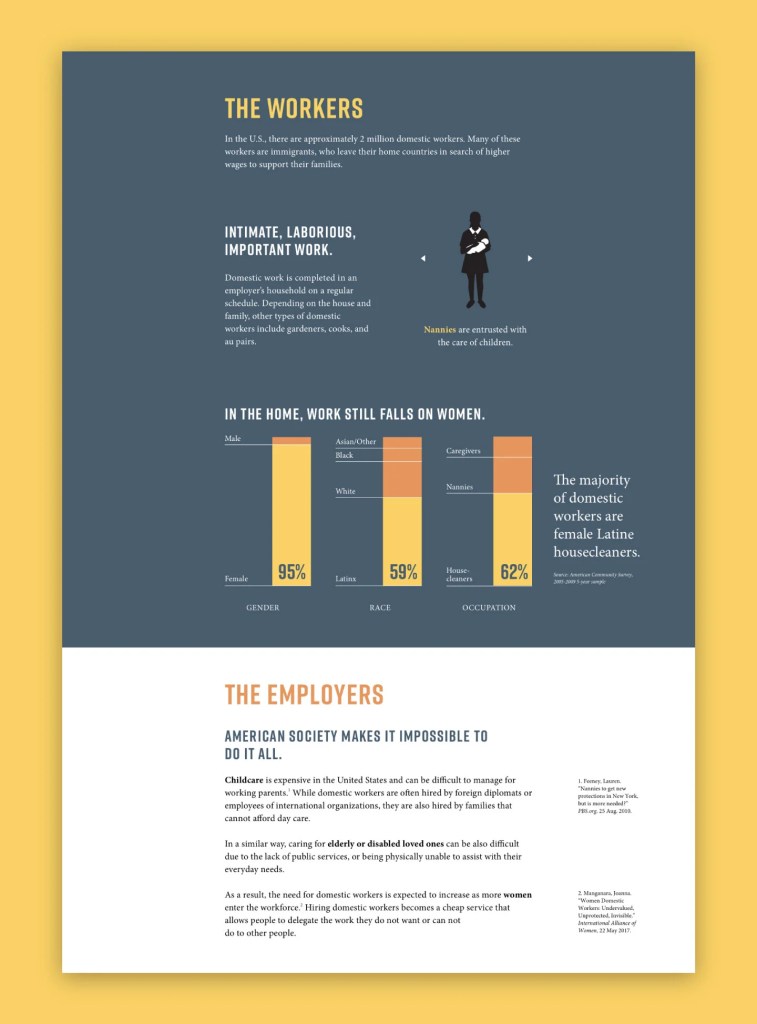
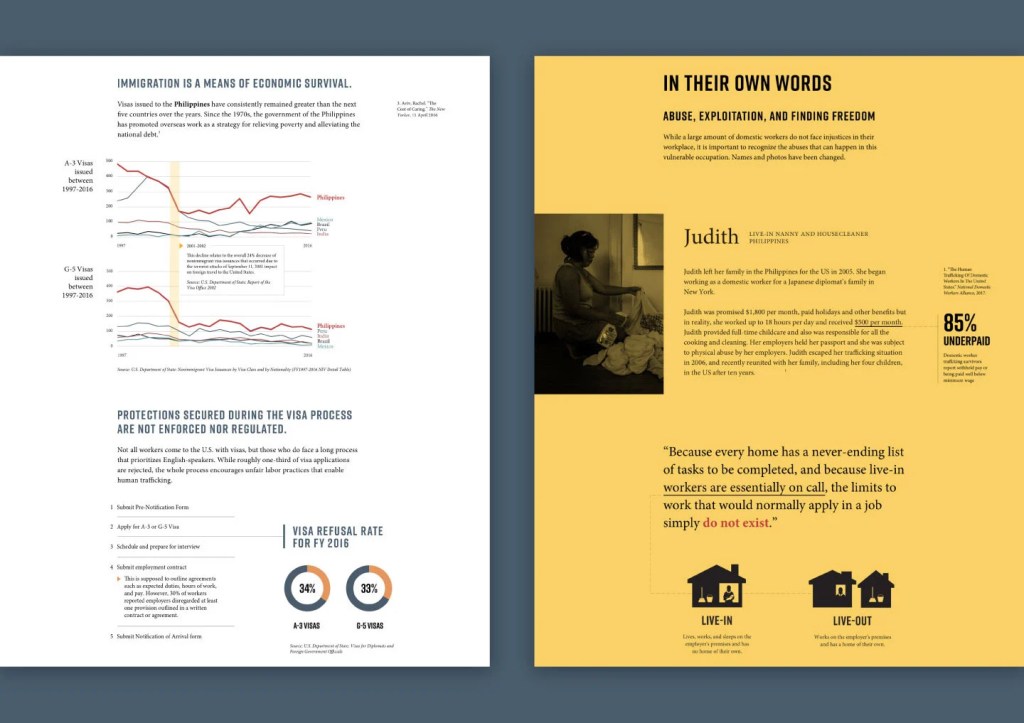
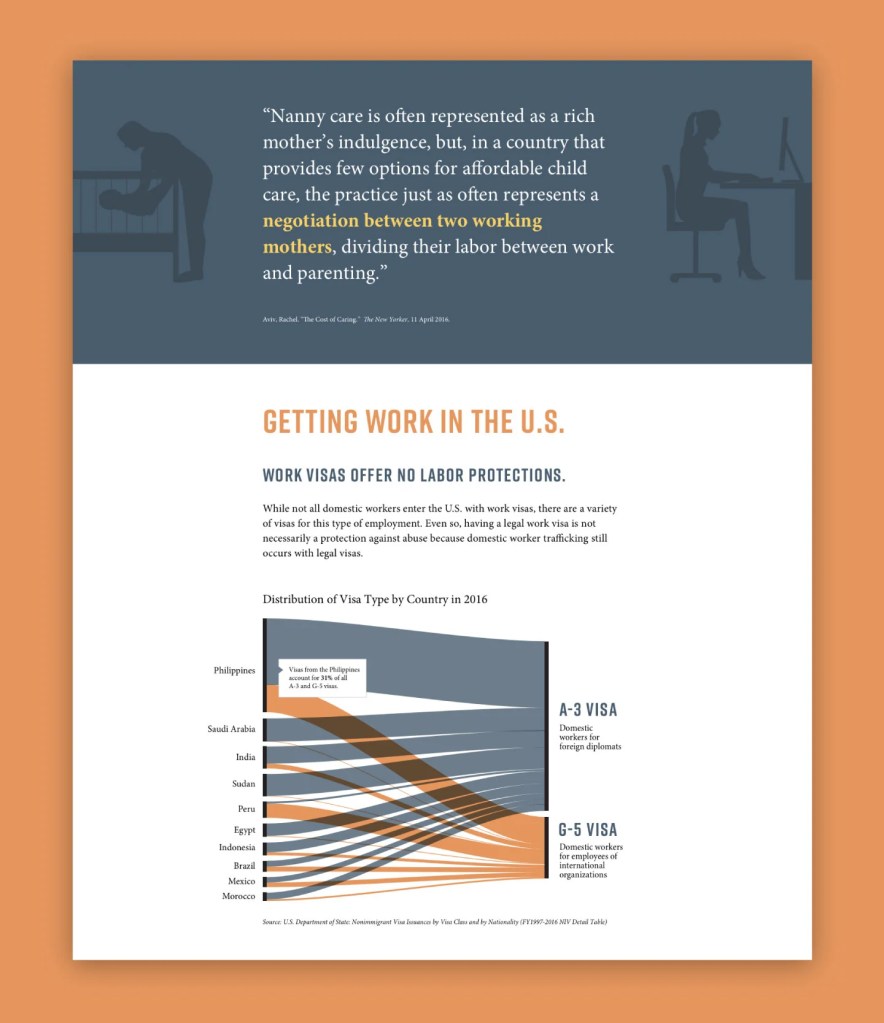
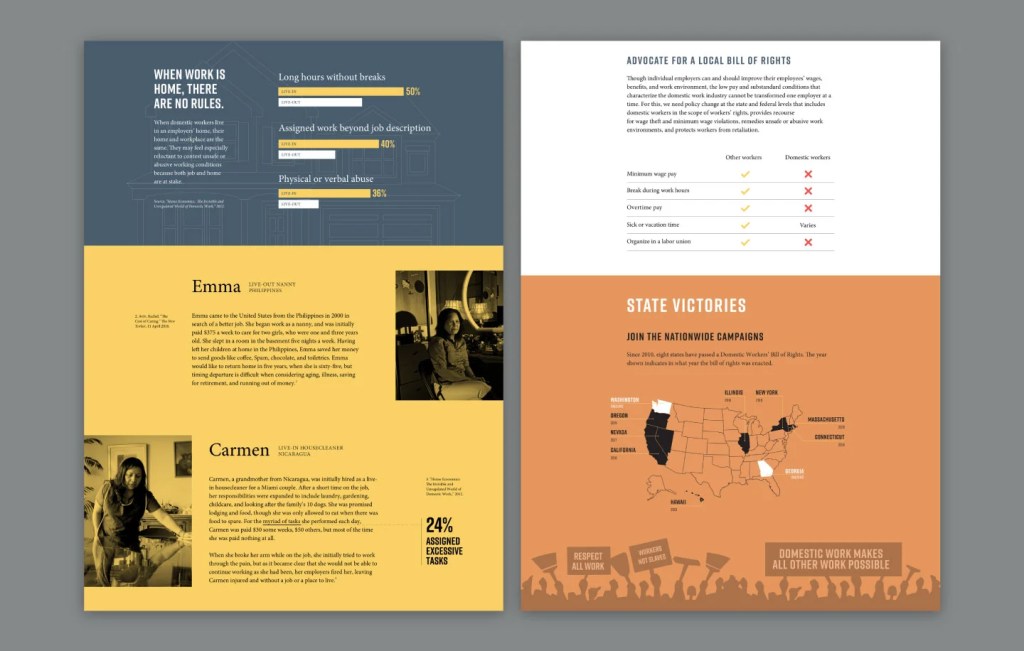
To begin unpacking the expansive political arena of immigration, this information design project focused on telling the story of people who come to the U.S. to work as domestic workers. While common in other countries and cultures, in the U.S. these workers are often hidden in private homes and thus unrecognized socially and politically.
Project Challenges
Research
Finding accurate data for domestic workers, who are often survivors of human trafficking, was difficult. There are no hard numbers about how many are employed annually, where each of them come from, and how long they stay. To balance this, I complemented the minimal data about workers’ conditions with visa information that is easily available from the U.S. Department of State.
Copywriting
I wanted this infographic to have a narrative tone that would not trivialize this subject, and would humanize these workers in a way that is respectful, optimistic, and just. As a result, I opted for concise language paired with quotes from interviews and research papers.
Organization
Combining statistics in a persuasive way was a new task for me, so I aimed to get a lot of feedback and critique from my peers about what seemed out of place or needed a better transition. Similar to writing an essay, much of the development at the end of the project involved moving pieces around or rewording key takeaways.
Special thanks to Sidney Chun, the campaign manager for the Seattle Domestic Workers Alliance, for offering insight and an expert opinion for this project.
 Chloe Yeo 💘